c
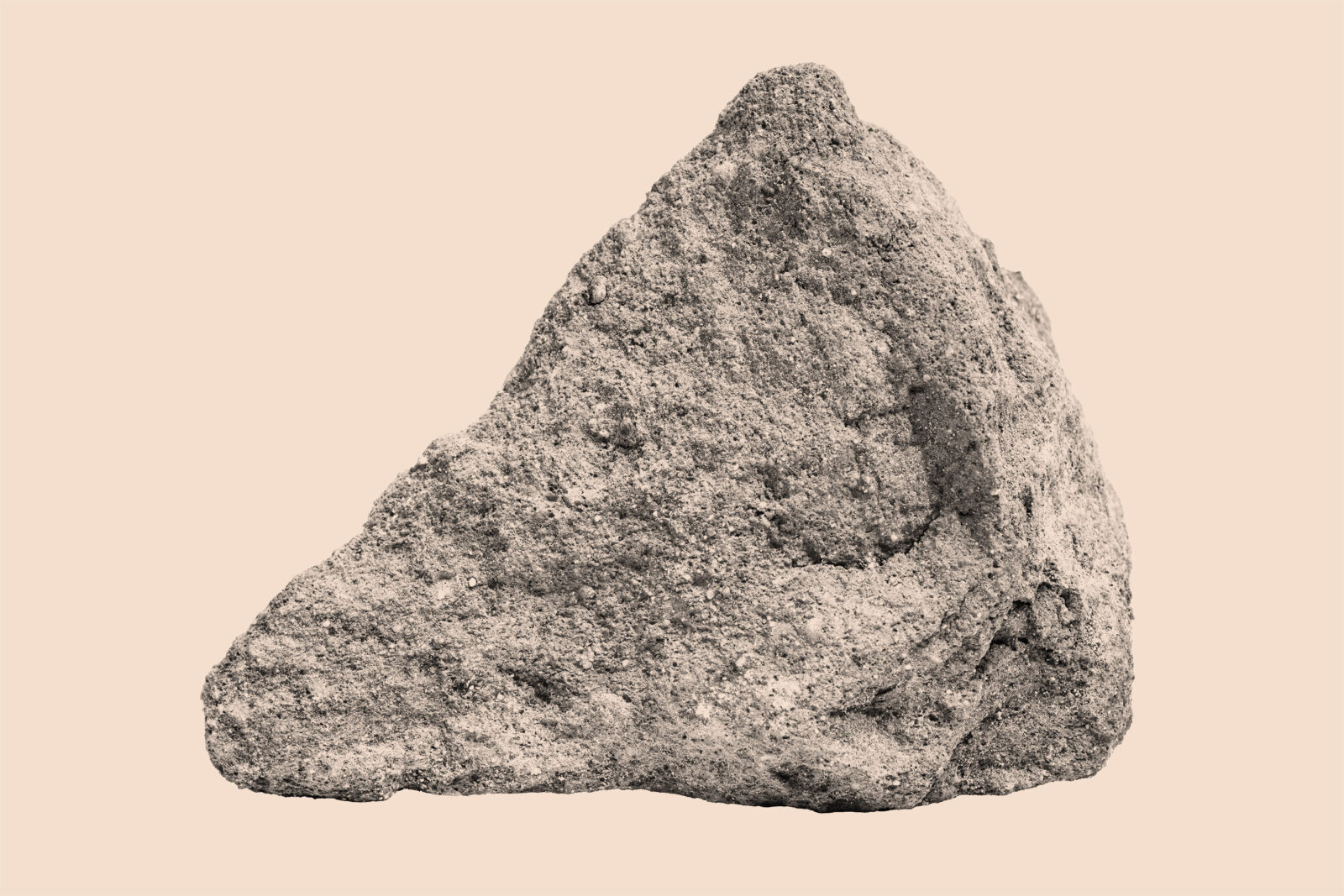
Material from the anniversary year ‘To the Substance’, macro photograph, 2024
© Bauhaus Dessau Foundation / Photo: Meyer, Thomas, 2024 / OSTKREUZ
Public Conference:
Discourse | Cracks | Narrative. Bauhaus Matters: Materials of modernity
10 am – 12 pm
Panel 1: Building materials: Media of modernity
Presentations and discussion
Moderated by Regina Bittner and Dorothea Roos
(Bauhaus Dessau Foundation)
Speakers:
10:10 am Kathleen James-Chakraborty (University College Dublin)
10:40 am Robin Rehm (ETH Zürich)
11:10 am Simon Mitchell (Oslo School of Architecture)
Kathleen James-Chakraborty
Before the Bauhaus: Transatlantic Exchanges in Reinforced Concrete
Although the Bauhaus Building in Dessau was innovative from a stylistic point of view, reinforced concrete had already been assimilated into a wide variety of aesthetically ambitious German architecture both before and after the First World War, of which the most celebrated were perhaps erected by Max Berg and Hans Poelzig in Breslau (now Wroclaw in Poland). It was a multivalent material, valued for the degree to which it was simultaneously technologically modern and yet associated with an almost primeval monumentality. Drawing upon the publication in German engineering literature of concrete structures in the United States also enhances our understanding of the degree to which the German construction industry, if not necessarily avant-garde architects like Gropius, was well aware of a much wider range of American uses of the material than the Fordist paradigm so obviously quoted by the Bauhaus and contemporary structures such as Erich Mendelsohn’s Schocken department store in Chemnitz. This undoubtedly made it easier for them to build their visions of the new.
Kathleen James-Chakraborty is professor of art history at University College Dublin, where she leads the European Research Council Advanced Grant project Expanding Agency: Women, Race and the Global Dissemination of Modern Architecture. She is co-author of The Belgian Friendship Building: From the New York World’s Fair to a Virginia HBCU, published in 2025 by the University of Virginia Press.
Robin Rehm
“Stoffwechsel.” Bauhaus and industrial material
The Bauhaus Building in Dessau, constructed by Walter Gropius in 1925/26, is made entirely of industrial building materials. Natural building materials, such as granite for floors or wood for windows, are absent. Instead, reinforced concrete, hollow concrete blocks and stone iron ceilings were used in the shell construction. The interior fittings include steel windows and industrial glass, stone-wood floors, Triolin floor coverings and plywood doors. The shift from natural to industrial materials is the subject of publications by László Moholy-Nagy (Von Material zu Architektur, 1928), Sigfried Giedion (Bauen in Frankreich. Bauen in Eisen. Bauen in Eisenbeton, 1928) and Heinz and Bodo Rasch (Wie bauen? Materialien und Konstruktionen für industrielle Produktion, 1928). These publications discuss aspects of industrial materials in detail in terms of purpose, function, form, economics and sociology. The material concepts of modernism reveal a fundamental problem in architectural theory. Their focus is on the problem of how the conditions of architecture have changed in relation to tradition. Jacques Rancière, to whose methodological explanations my contribution generally refers, considers reflection on such conditions to be an essential part of the definition of modern works of art and their legitimation. In the case of the material problem, Gottfried Semper’s definition of architecture as the result of “Gebrauch” (use) and “Stoff” (material) is examined more closely. His well-known expression “Stoffwechsel” (“material change” in the sense of Semper) describes the situation in which an object is transformed from its original, i.e., natural material into a material that is actually foreign to the object. This contribution discusses the implications that arise from corresponding material changes for the understanding of modern architecture in their materiality.
Robin Rehm
1992–1997: studied art history, archaeology, theatre studies at the Freie Universität Berlin; 2001: doctorate, FU Berlin; 2000–2001: scholarship, German Center for Art History in Paris; 2001–2005: assistant, University of Zurich; 2009–2012: staff member, Institute for Preservation and Construction History, ETH Zurich; 2012: habilitation, University of Basel; 2013–2020: lecturer, Institute of History of Art, University of Regensburg; since 2021: Senior Scientist, Institute for Preservation and Construction History, ETH Zurich
Simon Mitchell
Minor Histories from Minor Parts: Reevaluating the Ordinary in the Bauhaus Construction Research Archive
Much has been written about Bauhaus architecture. Its broad history, important buildings and leading figures are known around the world. However, much less has been written about the construction research archive in Dessau, an archive of Bauhaus-related building materials and components, be they rusted radiators or obscure chunks of concrete. Since the founding of the archive at around the turn of this century, it has accumulated and inventoried thousands of architectural elements as part of the ongoing conservation work of the Bauhaus. When heritage institutions such as UNESCO frame and monumentalise the value of Bauhaus architecture, they often do so by drawing on its canonised history. Charters claim that the Bauhaus embodies the spirit of Modernism, that its buildings stand as authentic testimonies, and that its value is universal and outstanding. In other words, the value of Bauhaus is often considered inherent. Yet, by following the work of the construction research archive, a different story of value emerges. For over twenty years, the archive has preserved Bauhaus buildings by identifying, collecting, transporting and cataloguing their material residue. These are objects sometimes sourced from private residences in the Dessau-Törten Housing Estate or from ordinary local buildings constructed around the same time and using nearly identical components. Through ethnographic observations, this lecture follows the work of the archive in 2019, involving tracing building components from their sites of acquisition into storage, digital databasing and an exhibition. It shows that the value of Bauhaus materiality is not inherent but contingent; produced through routine and practical archival negotiations. What emerges is a minor history of Bauhaus architecture told through the circulation and conservation of some minor parts. Starting from the archive space, I ask what alternative connections emerge when we follow the movements of specific building materials, and I consider the broader role that storage plays in imbuing otherwise unwanted building materials with renewed potential.
Simon Mitchell is a postdoctoral researcher at the Oslo School of Architecture and Design (AHO). He holds a PhD in architecture from the University of Manchester (2023). Working at an intersection of ethnography, archival theory and the history of architecture, his current research focuses on the storage lives and the circulation of architectural fragments and components. He is guest editor for the upcoming special issue of the journal Future Anterior on the theme of architectural provenance.
c
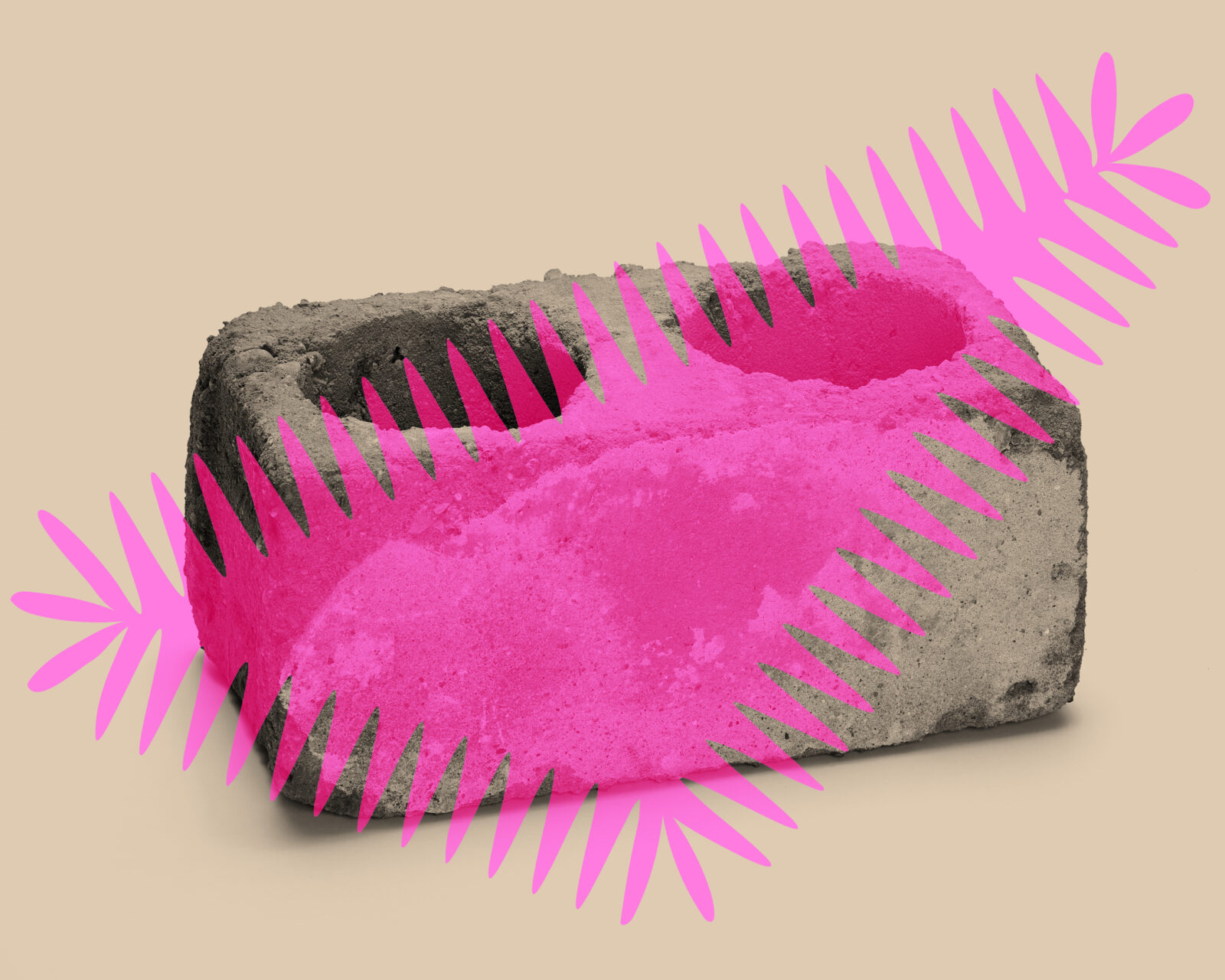
Slag concrete hollow block from the Mittelring 14 housing estate in Dessau-Törten, 1928 (coloured)
© Bauhaus Dessau Foundation / Photo: Gunter Binsack / Graphic: Heimann + Schwantes