c
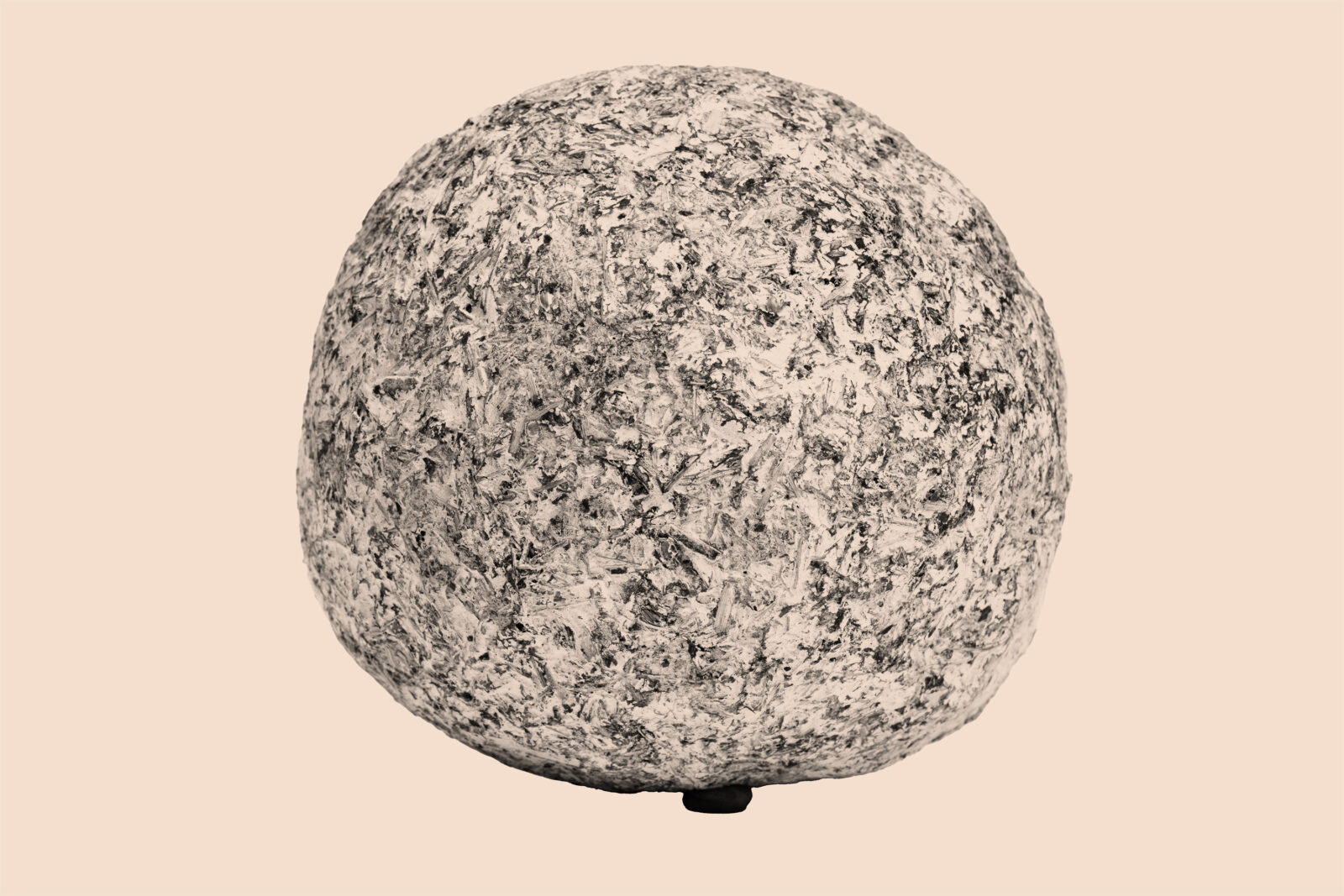
Material from the anniversary year ‘To the Substance’, macro photograph, 2024
© Bauhaus Dessau Foundation / Photo: Meyer, Thomas, 2024 / OSTKREUZ
Public Conference:
Discourse | Cracks | Narrative. Bauhaus Matters: Materials of modernity
5:30 – 7:30 pm
Panel 3: Building as assemblage
Panel discussion with statements
Moderated by Elke Beyer
(Anhalt University of Applied Sciences)
With:
5:40 pm Karola Dierichs + Robert Stock (Cluster of Excellence Matters of Activity, Humboldt-Universität zu Berlin)
6:00 pm Santiago del Hierro (ETH Zurich)
6:20 pm Philipp Misselwitz (TU Berlin/Bauhaus Earth)
6:45 pm Hannah le Roux (University of Sheffield)
While the architectural history of modernism was determined by the canon of a history of the designing architects and their buildings, multidisciplinary research approaches now examine architecture as a field of collaborative practice, of interaction of the most diverse actors, economies, matters, types of knowledge and technologies. Shifting the focus of attention away from the object of the building towards the process of making and the activity of the materials in the context of the production of architecture, buildings become relevant not as fixed but rather as dynamic structures of the interaction of climate, soil, different material cycles, energy flows and power relations. This also includes their pre- and afterlife, the landscapes and ecosystems that were destroyed for the extraction of building materials, the mountains of rubble, piles of debris and material stores that house the now obsolete buildings. The final panel discussion is an invitation to debate current approaches in architecture and architecture research in dialogue with the architectural heritage of the Bauhaus. Developing new perspectives on the narratives of architectural modernism through the lens of Bauhaus matters is not only about knowledge that has been ignored by historiography, but also about a general readjustment and decentring of the discipline now taking place. Which concepts of material and matter have shaped the discourse on the physical aspects of building to date? And, assuming a critical distance from static concepts of architecture as a final product turned to stone, whatstrategies of building and understanding architecture as a co-production of material cycles, energy flows and ecosystems could be designed?
Karola Dierichs + Robert Stock
Cultures of Co-Creation: Syntopia
Amidst a turn to wood as a sustainable construction material for architecture, many countries face a growing impact on monoculture-coniferous forests. Producers of spruce timber must negotiate the effects of increasing bark beetle populations, such as the European spruce bark beetle (Ips typographus). These populations are thriving due to global warming and extended drought periods, resulting in large amounts of so-called beetle-infested wood. With our presentation, we argue for a novel approach that takes the qualities of this often-undervalued material into account. First, we introduce the notion of Syntopia, contextualising it within the history of multispecies discourse and symbiotic relations. Drawing on Rivas’ (1964) biological research and transferring it to architecture, the project Syntopia aims at creating inhabitable structures that are sourced from and embedded in the ecologies of the places where they are built. In this context, we also discuss implications of co-creation involving nonhuman actors in the realm of architectural theory. In the remainder of the talk, we present recent experimental data and a prototype emphasising the possibilities of beetle–fungi-timber. In the outlook, we speculate about wooden futures and the precarious co-existence with Ips typographus and other influential foresters.
Karola Dierichs is a researcher integrating the fields of materials design and minimal machines for architectural construction. The main goal is to establish architecture as sourced from and embedded within a given environment. For this, methods of science and art are integrated to establish a novel paradigm of fundamental research.
Robert Stock is a Junior Professor for Cultures of Knowledge at the Department of Cultural History an Theory at Humboldt-Universität zu Berlin. His main research interests are environmental dis/humanities, digital media and dis/abilities and Luso-African decolonization processes. Recently, he has been concentrating on damaged landscapes, Anthropocene temporalities and arboreal-situated knowledge.
Santiago del Hierro
Walked by the elders. Rethinking territorial boundaries in the Andes Amazon
In recent years, a growing body of research has highlighted the importance of indigenous territories in safeguarding biodiversity in the Andes Amazon, contributing to climate change mitigation and protecting ancestral cultures. However, questions arise regarding the circumstances surrounding the definition of these territories: when and how were they conceived? Who determined their current boundaries and dimensions? More significantly, what about indigenous land outside legallyacknowledged “indigenous territories”? The presentation will interweave landscape and knowledge by exploring two actionresearch collaborations with the Inga people of Colombia. It will expand on the intricate tapestry of indigenous territoriality by looking at the profound connections between Inga communities and their land, unveiling how cultural practices, spiritual beliefs and communal approaches shape their understanding of place. Using critical cartography, the research questions the political implications of territorial recognition, tracing the ongoing struggle of the Inga for self-determination and their engagement in international conservation efforts. By highlighting the limitations of current representations and advocating for a more inclusive understanding that acknowledges the deep- rooted relationship of the Inga with their traditional land, this work aims for a fundamental shift in how indigenous territories are understood. This shift offers hope for a more holistic and culturally sensitive approach to territorial planning and design in the Andes Amazon.
Santiago del Hierro is an Ecuadorian architect and researcher based in Zurich and The Hague. Since 2008, his research has focused on the geopolitics of the northern Andes Amazon, exploring how design disciplines can alternatively engage issues related to resource extraction, the expansion of agricultural frontiers, encroachment upon indigenous territories and contemporary narratives on what a post-development landscape might hopefully look like. Santiago holds an M.A. from Yale University, where he attended as a Fulbright scholar. He was a research fellow at the Jan van Eyck Academie in Maastricht
between 2009 and 2010.
Philipp Misselwitz
Regenerative building as a climate healer?
In the context of the planetary crisis, we need a fundamental change of perspective. Instead of viewing urban and rural areas as opposites, human settlements in the post-Anthropocene should be seen as part of the ecosystems and natural contexts that surround and permeate them, i.e. as part of an overall spatial system with (limited) available material resources and material flows, in which we are embedded and upon which we depend. Instead of continually extracting resources from this system (extractivism) and polluting it with waste, our actions in future must be geared towards restabilising and strengthening the interrelationships between humans and nature, i.e. making a positive or ‘regenerative’ contribution. One might therefore speak of a vision of regenerative urban landscapes. One example of this is the complex effects of regenerative building materials. Sustainable value chains for durable, bio-based building products made from regional materials such as wood, straw, hemp or from paludiculture can create an economic basis for landscape restoration and the stabilisation of sink functions and provide a variety of ecosystem services. By replacing CO2-intensive building materials and simultaneously storing CO2, they can contribute significantly to climate protection as humancaused carbon is reduced.
Prof. Philipp Misselwitz, CEO of Bauhaus Earth, is an expert in global urbanisation and the role of cities in the transformation towards sustainability. He studied architecture and urbanism at the University of Cambridge and the Architectural Association in London. Following his work as a consultant in international development, he was appointed professor in the Department of International Urbanism and Design at the University of Stuttgart in 2010. Since 2013, he has held the Chair of the Habitat Unit at Technische Universität Berlin. He is also a visiting professor at the University of the Witwatersrand in Johannesburg and a partner at Urban Catalyst, a planning and design consultancy. In 2021, he became CEO of Bauhaus Earth.
Hannah le Roux
Thinness and risk: tracing post-Bauhaus asbestos sections
The great benefit that asbestos brought to building products in the twentieth century was the creation of fireproof, strong, thin sheets of reinforced cement. Deployed in Bauhaus experiments, the material was further disseminated through Gropius’ Harvard graduates as well as through the industry-sponsored work of Sigfried Giedion. Expanding on my research into AC: The International Asbestos-Cement Review, in which asbestos-cement products were represented with delicate red lines in didactic, isometric drawings, this contribution considers how the taste for thin materials is an enduring legacy of Bauhaus aesthetics. Thinness has its value in the reduction of material footprints, but, in the case of asbestoscement, as with plastics, laminate glues and adhesives, it widely disseminated risk simply by virtue of being spread thinly. Expanding on the tension between “lightness” and the heavy topic of deadly materials suggested in the conference statements, I suggest we return to the drawing as a site to re-annotate these histories, using cases of cladding, roofing and sanitation as examples. As in the event programme itself, where colour recoding is deployed as a technique of estrangement, I suggest that a history of architecture informed by science and technology studies is uniquely placed to relink thin surfaces with these thick and tragic narratives.
Hannah le Roux is an architect, theorist and educator at the School of Architecture and Landscape at the University of Sheffield. She is a visiting associate professor at the University of the Witwatersrand and was guest professor in the Institute for the History and Theory of Architecture (gta) at ETH Zurich. Her current and related research projects are „MineLives“ on post-extractivist liveability and “Sectioning” on the mediation between technical knowledge and colonialism in architectural practice.
c
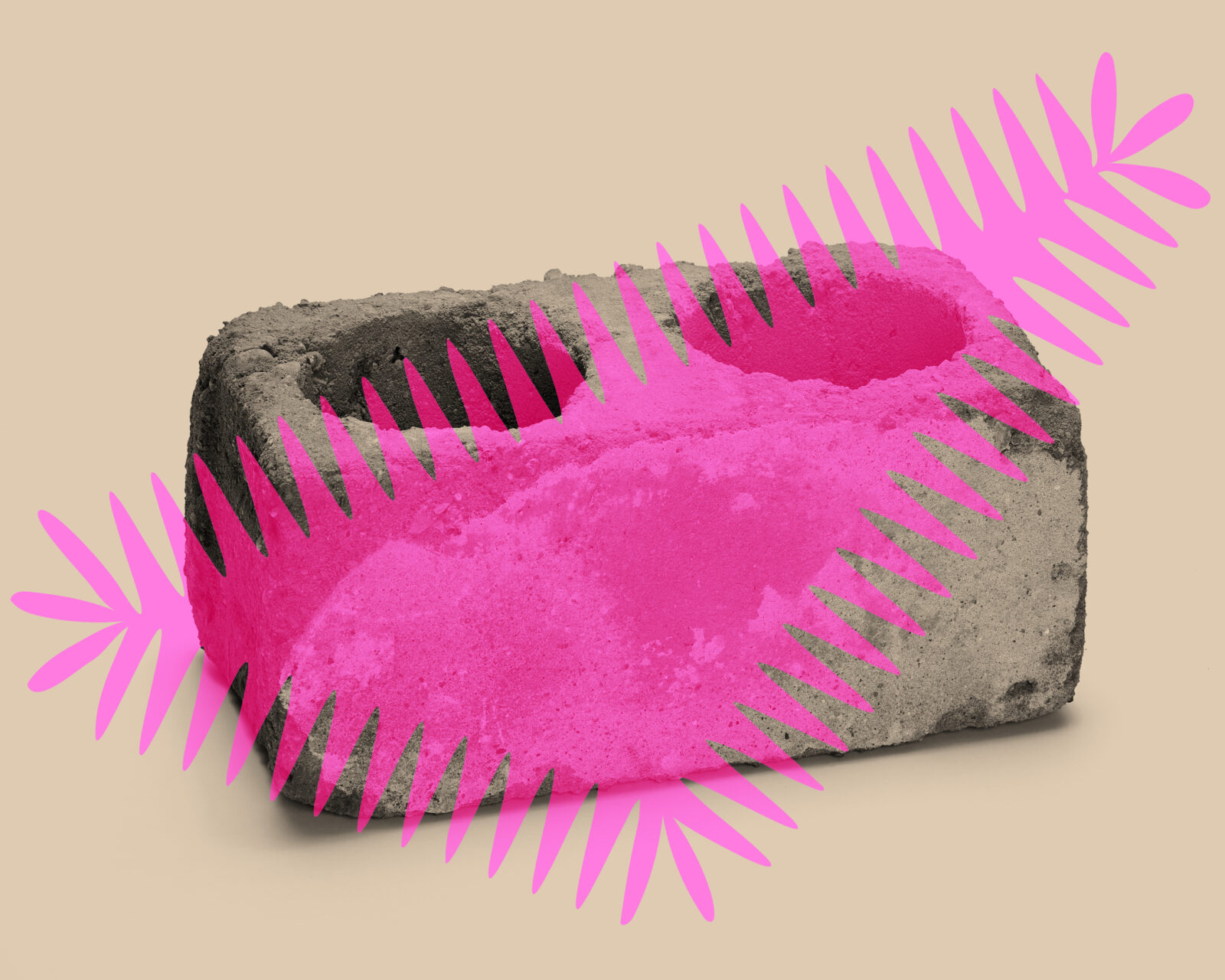
Slag concrete hollow block from the Mittelring 14 housing estate in Dessau-Törten, 1928 (coloured)
© Bauhaus Dessau Foundation / Photo: Gunter Binsack / Graphic: Heimann + Schwantes