Talk + Film + Discussion + Art + Food and drink
Friday Group: Building Stock + Re-Use
17 Apr 2026
6 – 9 pm
Former Zeeck department store
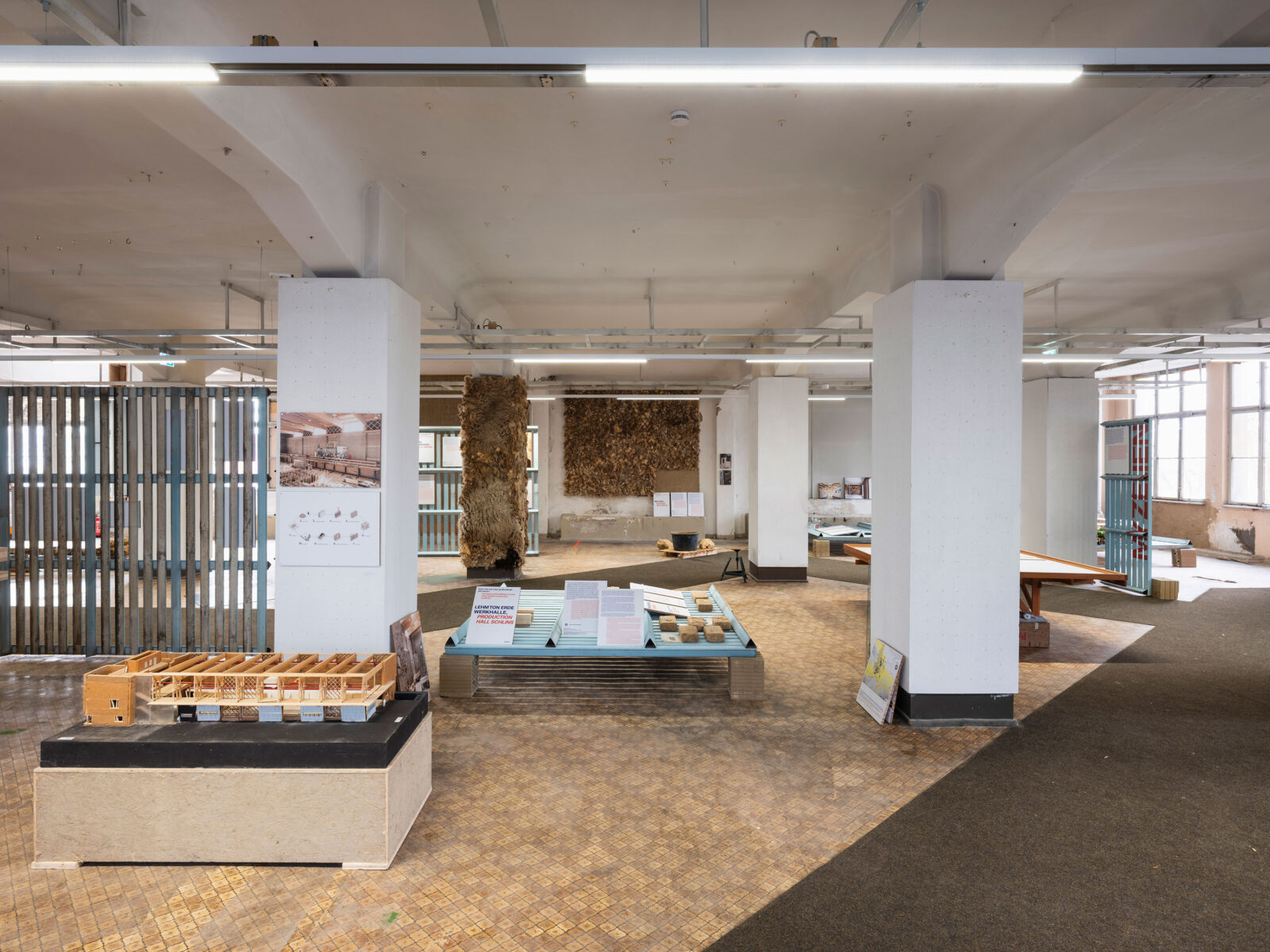
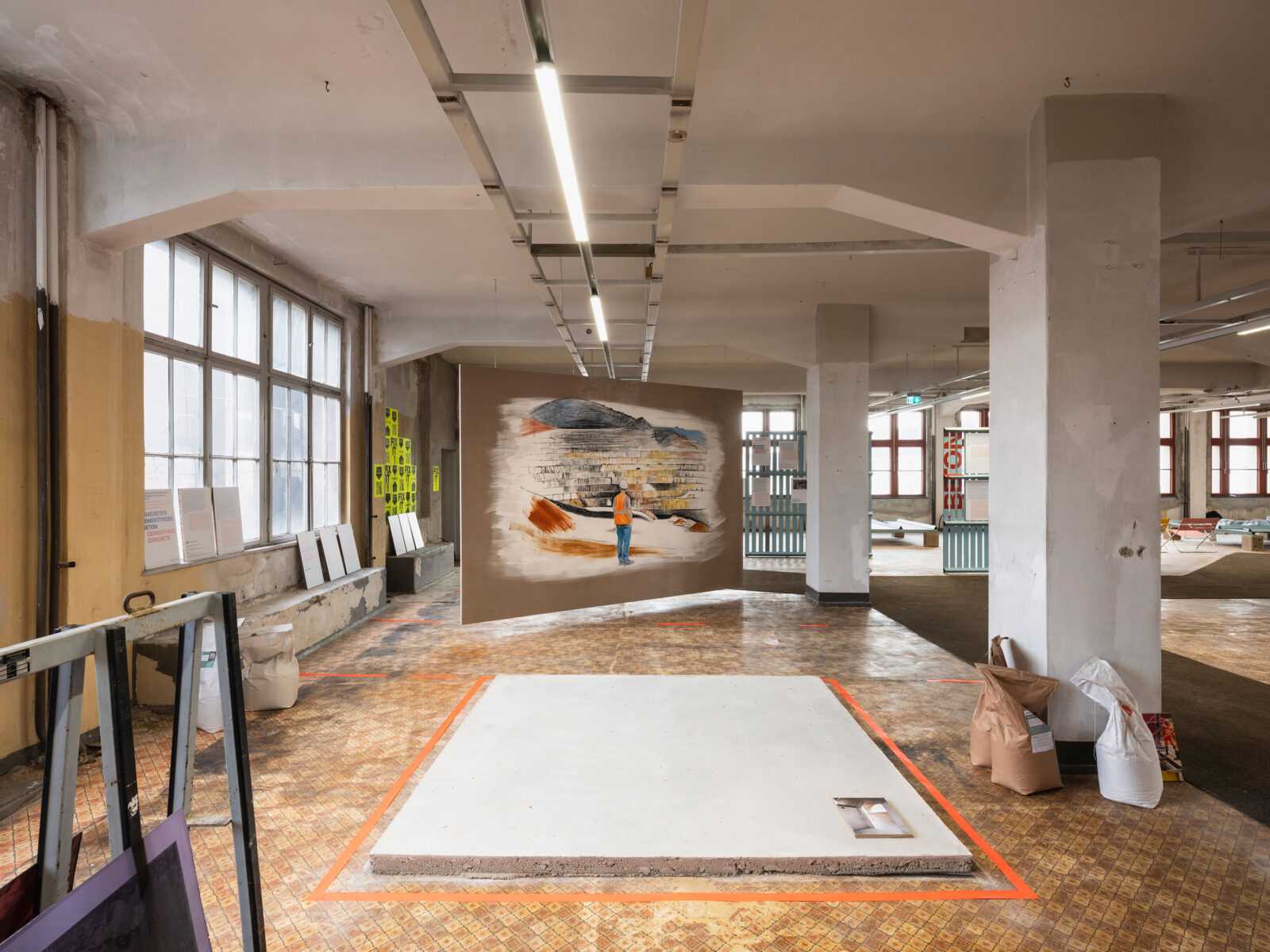
This exhibition in the former Zeeck department store highlights cross-disciplinary working methods and practical examples that combine aesthetic with sustainable design. It explores alternative modes of building and is designed to be CO2-neutral, taking the form of a “model exhibition” – both showcase and functional space at once.
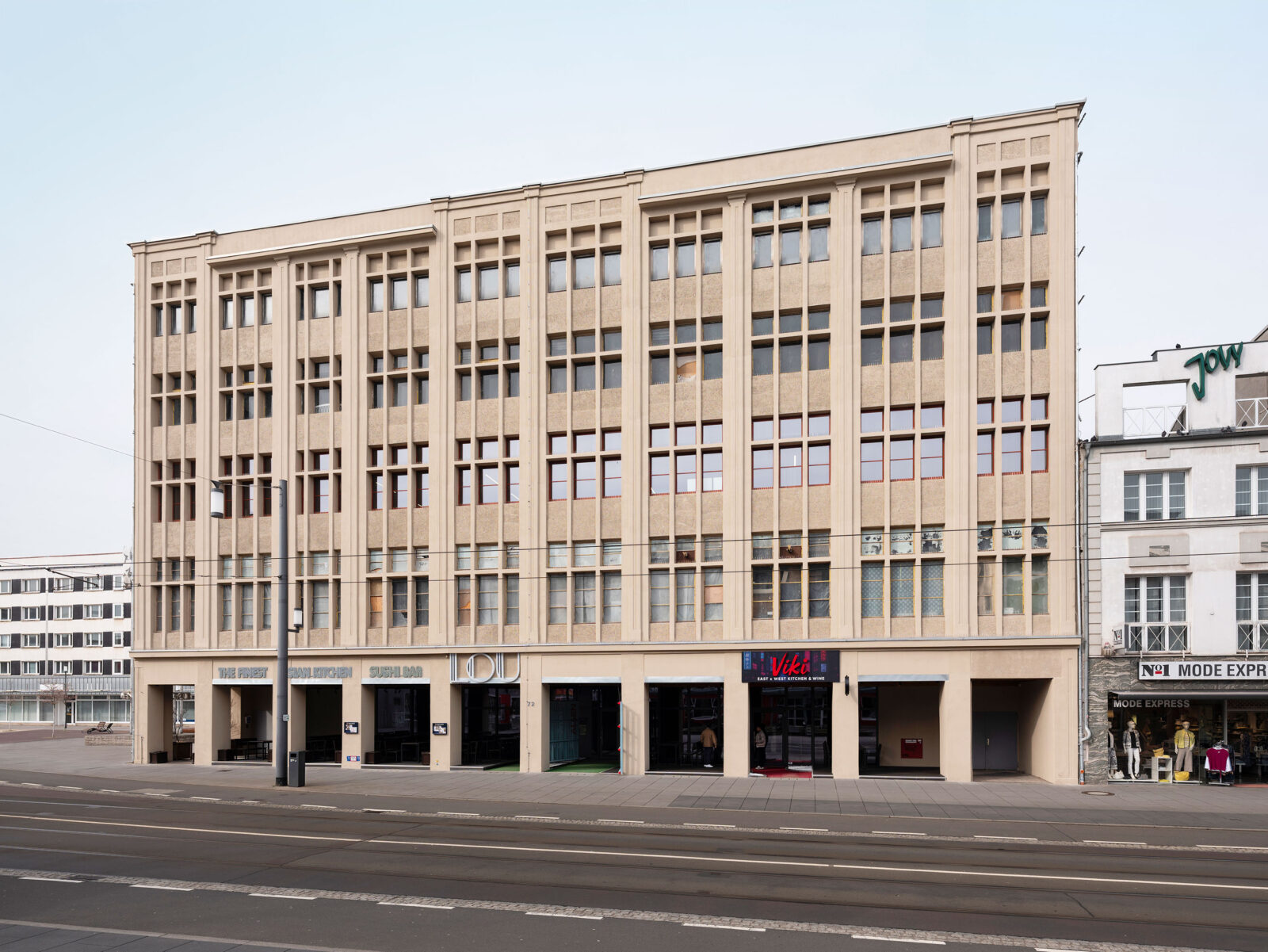
The former Zeeck department store in downtown Dessau is the point of departure for the exhibition Algae | Debris | CO2. Opened in 1908 and expanded in the 1920, the building is an outstanding example of modernist department-store architecture, and its material layers tell a story of the city lasting more than a century.
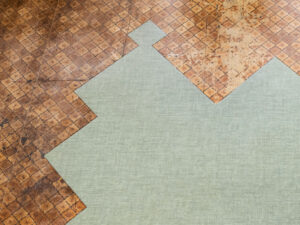
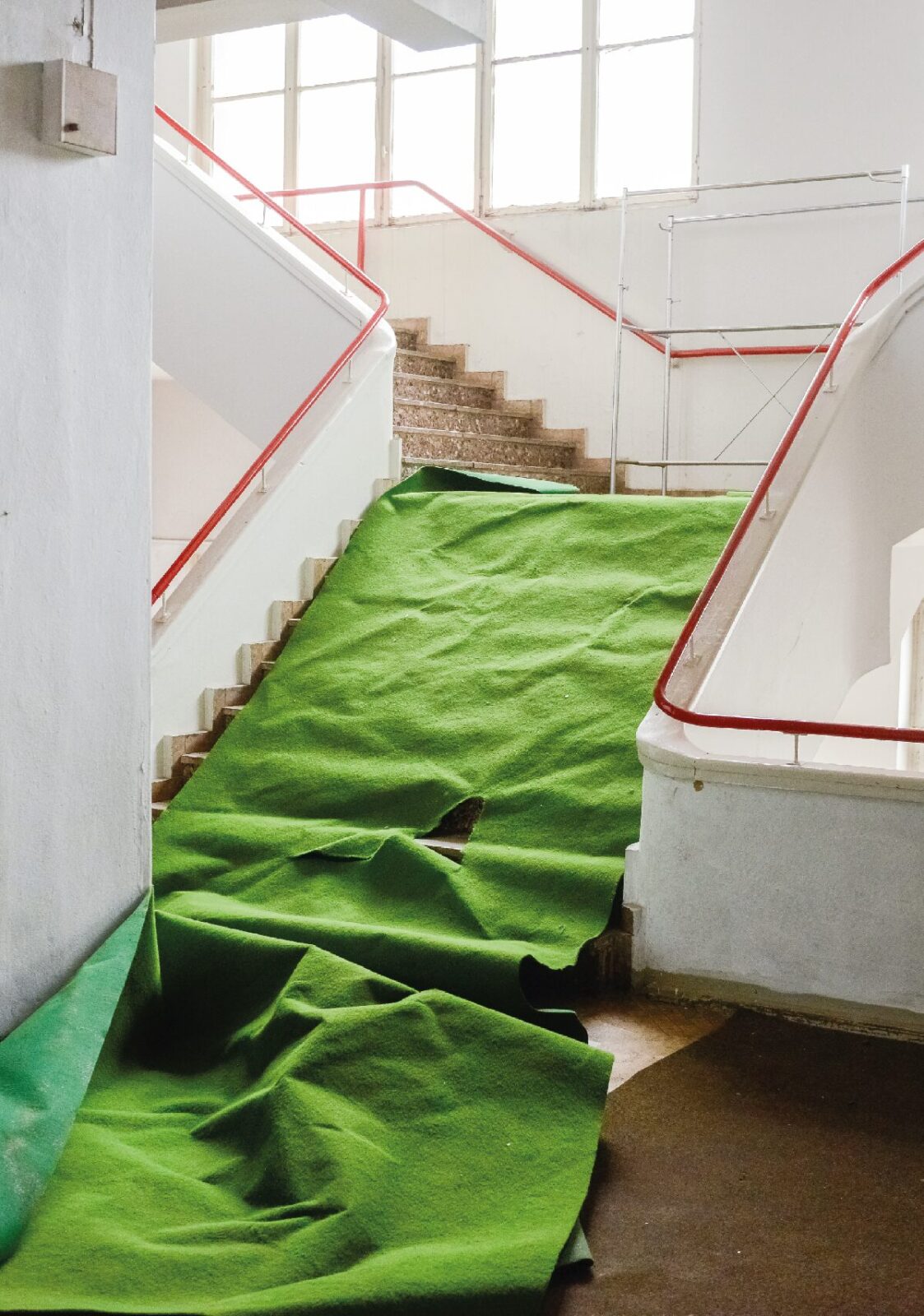
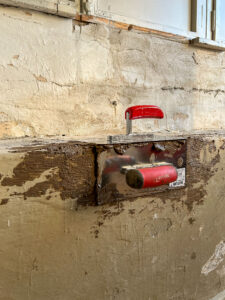
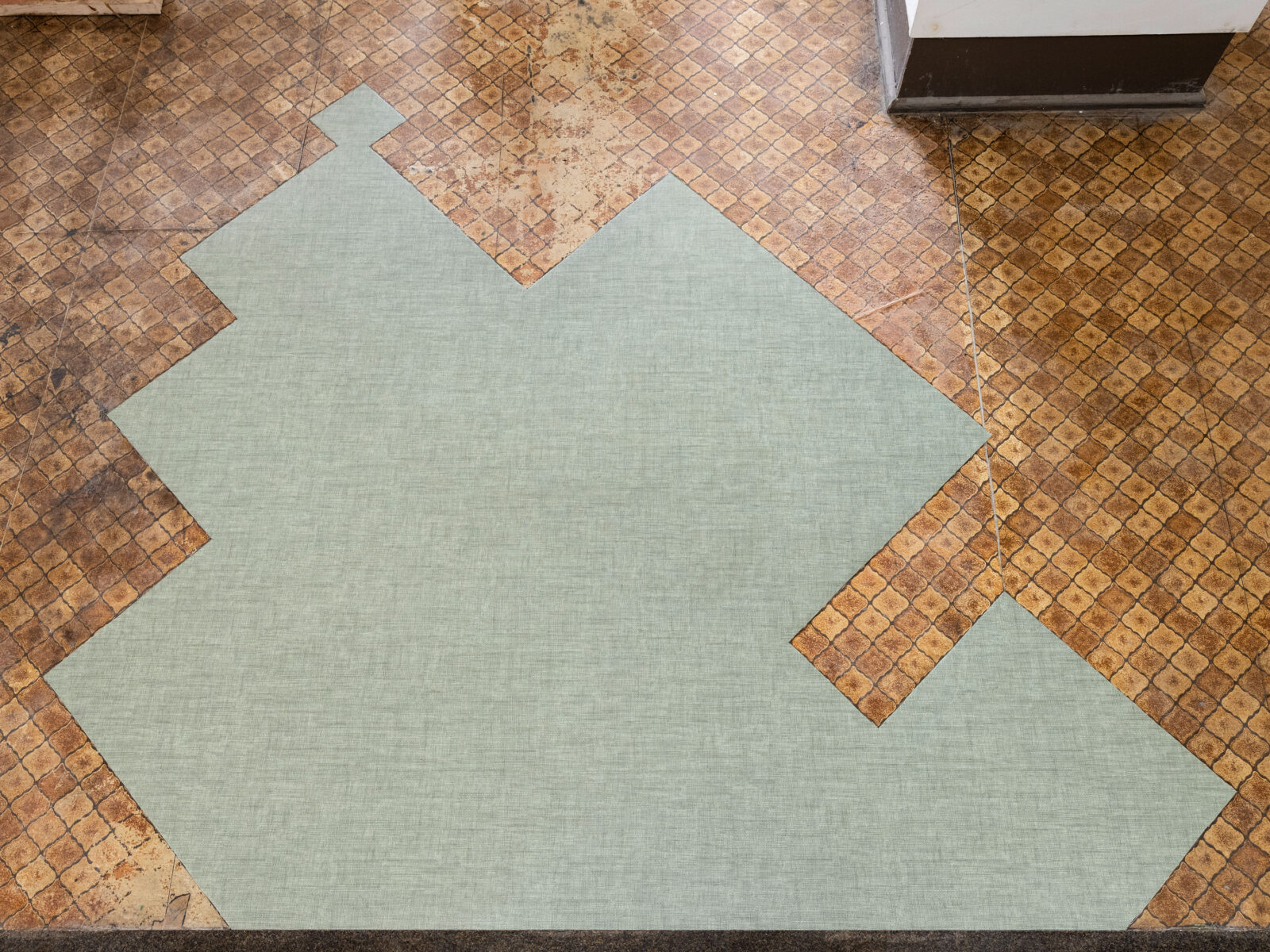
The exhibition makes this history visible: Within the framework of the exhibition, so-called time windows at the stairs, floors, pillars, and ceiling provide views of the material history of the building. What seems unchanged at first glance reveals on closer inspection a sensitive approach to the historical building fabric. Flaking plaster is removed, holes are filled, whatever can be repaired is repaired or renovated – for example, old windowpanes or the panels of the Hetaflex aluminium façade, which were removed when the façade was renovated in the spring of 2025. Additions such as the ceiling lighting system and repairs of the floor covering in the 1980s follow the principles of reusability.
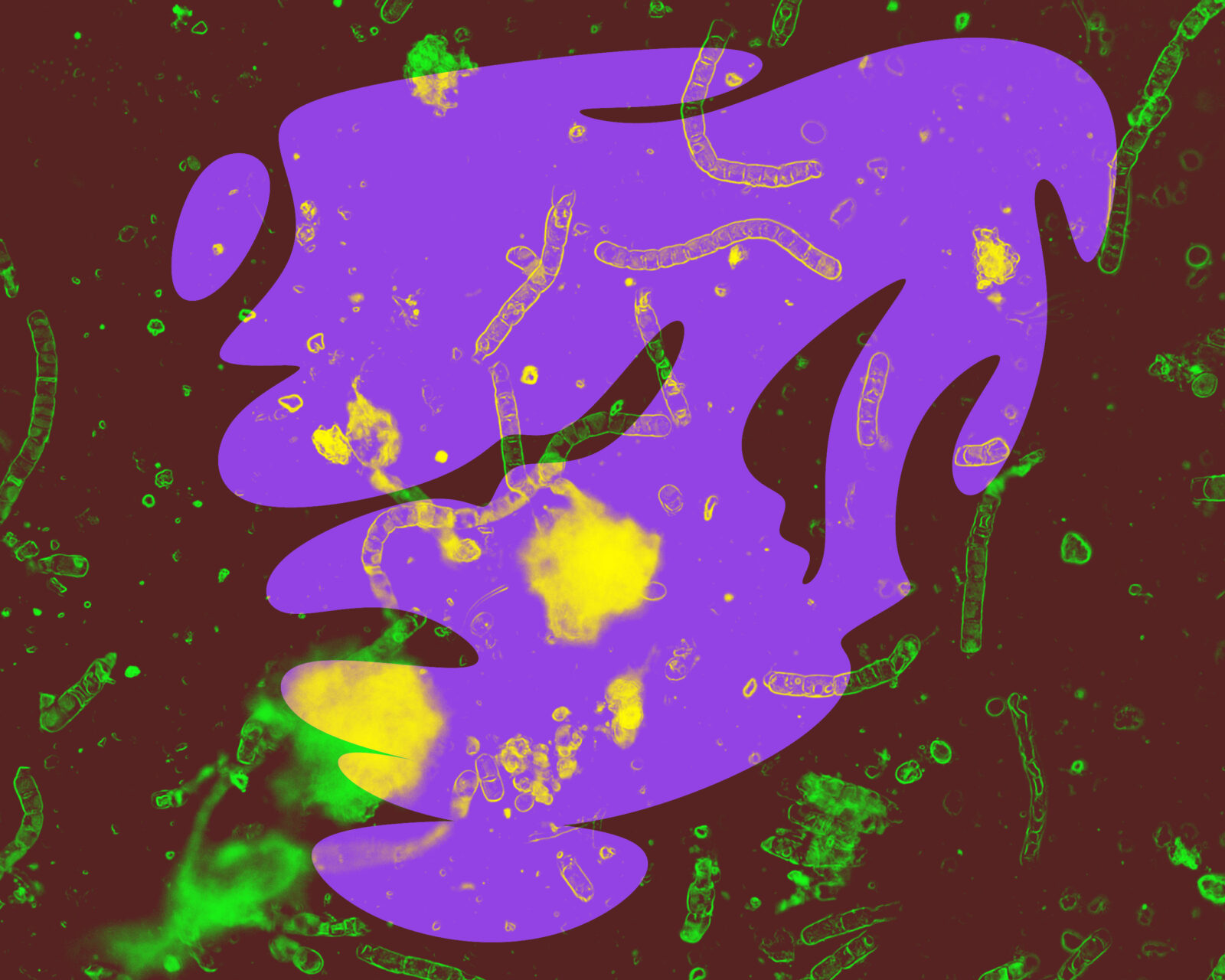
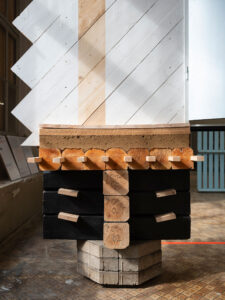
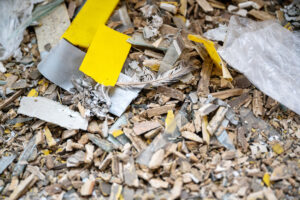
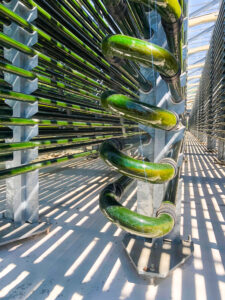
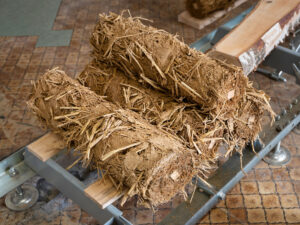
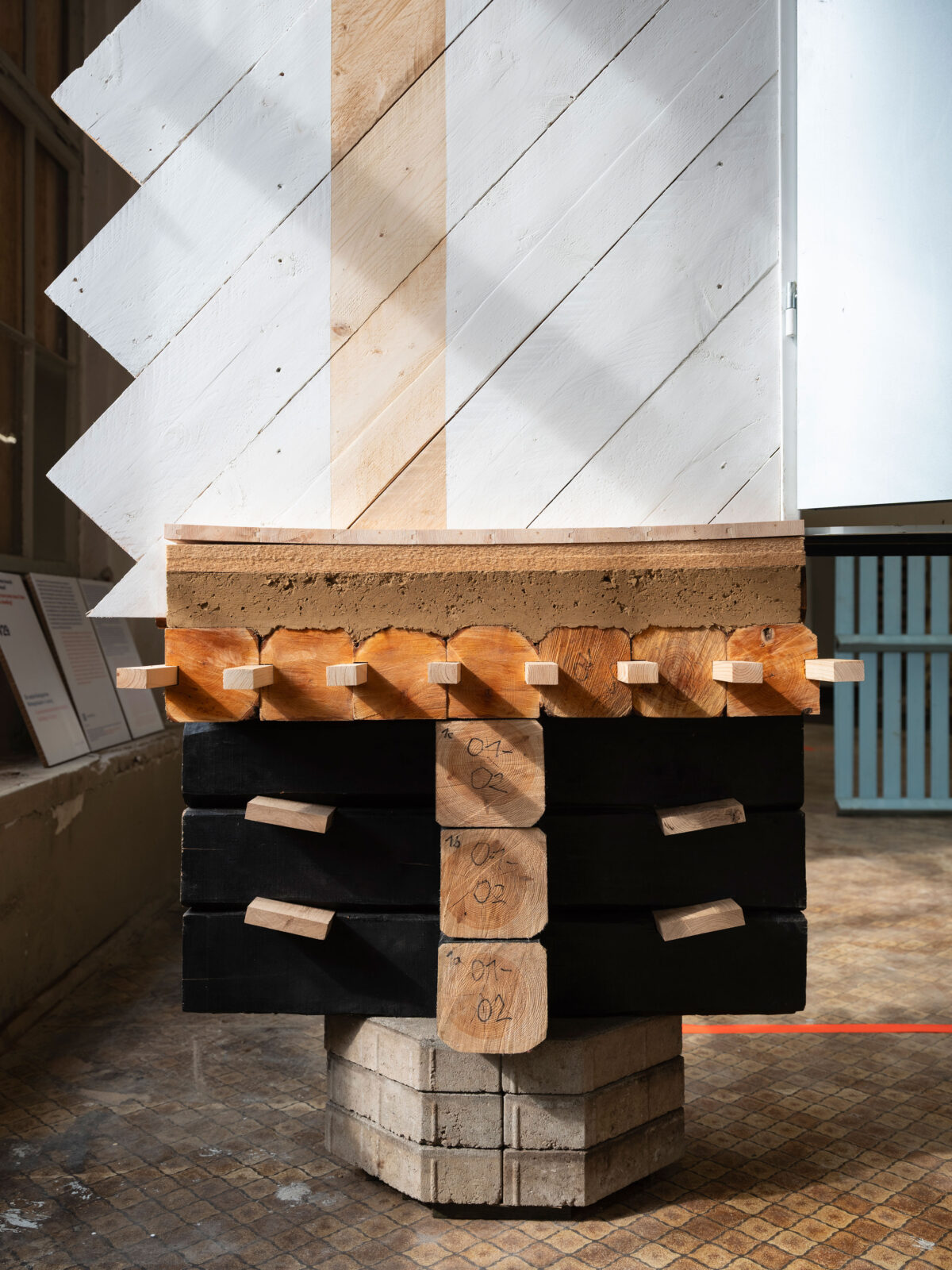
Algae | Debris | CO2 is a “model exhibition” for sustainable design intended to produce as little CO2 as possible. It is a space for display, use, and events all at once. It presents cross-disciplinary approaches to research and collaborative work in which human and non-human actors, economies, technologies, and material streams come together. The exhibition centres on alternatives to the canon of materials of (classical) Modernism: for example, clay, mycelia, algae, and geopolymer concrete based on clay, basalt, flax, and recycled materials. For example, the InMyco project at the Anhalt University of Applied Sciences is developing innovative mycelia materials, while waste materials from regional agriculture, forestry, and industry are used as substrates.
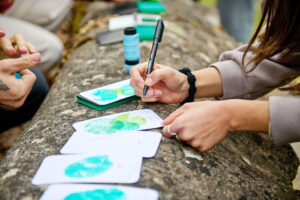
Tradespeople, small and larger companies, researchers, designers, and artists were closely together here. Building is understood to mean a joint process that is sparing with material resources and that needs to be updated constantly because it is subject to change. During the exhibition, model construction sites offer insight into these processes and workshops invite others to participate.
Opening:
28 Mar 2026, 11 am in the Bauhaus Building
Curator’s tour:
29 Mar 2026, 11 am
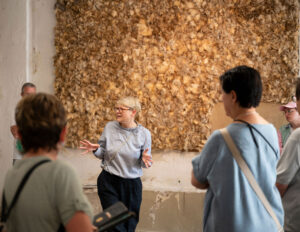
Curator tour with Barbara Steiner (Tickets online):
10 Apr / 5 June / 10 July / 28 Aug 26, 5 pm
Curator tour with Juliane Aleithe (Tickets online):
24 Apr / 22 May / 19 June / 14 Aug / 18 Sept 2026, 5 pm
Group tours
available: Tue – Sun, 10.30 am + 11.30 am + 2.30 pm (Booking)
Finissage:
27 Sept 2026, 2–4 pm
The renaissource intervention focuses on the renaissance (rebirth) of a new approach to resources. The design and architecture departments at Anhalt University of Applied Sciences are presenting various creative perspectives in the Tapetenraum, Glasraum and Werkraum within the exhibition.
Gebrochene Verheißung
29 March – 12 May 2026
With their striking architecture in prime locations, churches and department stores promise happiness that they are hardly able to deliver on anymore. To restore the charisma of these public places, four scholarship holders developed new ideas: Marius Busch, Maximilian Hartinger, Louis Volkmann and Karla Zipfel, curated by Karin Berkemann, sponsored by the German Foundation for Monument Protection.
Using Design to Connect
19 May – 31 July 2026
Three projects, one mission: to make our world more sustainable, fairer and more beautiful. How can design shape and redefine relationships? Answers to this question are provided by Julia Lohmann, Alberte Holmø Bojesen, and Anna van der Lei (Department of Seaweed), Francesca Tambussi (Hyperburgers), Ezgi Mutluer, Leonardo Mesa Cabrera and Wencke Hamann (VorOrt-Haus / Druckbar).
Erbgut | D-Mag
4 August – 27 September 2026
Just as a genome stores all genetic information in the DNA of living beings, our cultural heritage contains the influencing factors that we use today to deal with the realities of our lives. Three artistic positions by Martin Maleschka, Nikita Vinokurov and Katrin Günther show individual approaches to this topic.
Students from the “Editorial Design” seminar are presenting a new magazine in the D-MAG series on the theme “Kaufhaus Z — inside out”. In it, they explore the building, its occupants, its history and its immediate urban surroundings. Gerald Christ with students: Angelina Berndt, Celina Elsner, Alena Goldmann, Sophie Greilach, Hannah Hieke, Helene Holz, Kristin Ittershagen, Mia Giulietta Künzler, Tien Long Pham, Nina Rehm, Lotte Sajitz, Enie Schiepe, Leon Sroka, Elias Troyke.
A joint project of the Bauhaus Dessau Foundation and Anhalt University of Applied Sciences
17 Apr 2026
6 – 9 pm
Former Zeeck department store
8 May 2026
3 – 6 pm
Former Zeeck department store
22 May 2026
6 – 9 pm
Former Zeeck department store
23 May 2026
1 – 5 pm
Former Zeeck department store
26 Jun 2026
4 – 7 pm
19 Jun 2026
6 – 9 pm
Former Zeeck department store
17 Jul 2026
6 – 9 pm
Former Zeeck department store
31 Jul 2026
10 am – 6 pm
Former Zeeck department store
21 Aug 2026
6 – 9 pm
Former Zeeck department store
12 Sep 2026
11 am – 2 pm
Former Zeeck department store

18 Sep 2026
6 – 9 pm
Former Zeeck department store
19 Jun 2026
5 pm
Former Zeeck department store
Altro Deutschland GmbH & Co. KG; Phil Ayres, Madison Lindsay, Chair for Biohybrid Architecture, Royal Danish Academy; Nora Mona Bach; Biosphärenreservat Mittelelbe; BioLab Burg Giebichenstein Kunsthochschule Halle; Barbara Buser, baubüro in situ; Denkmal-Bauhof Halle; Deutsche Basalt Faser GmbH; EcoTool AG; Einfach Bauen, TU München; Estrich-Fachbetrieb Wermke; Etex Building Performance GmbH/ Etex Group S.A.; Finizio GmbH; Florian Nagler Architekten und Forschungszentrum Einfach Bauen, TU München; Fraunhofer-Allianz Bau ; Kay Frömmigen, KOBA. Ökologisches Bauen; GIMA-Lehmziegel/Girnghuber GmbH; Carola Griehl, Mario Salisch, Christian Kleinert, Algenzentrum Köthen; Olaf Knape, Schlosserei Knape; Anna Gronemeyer, Sofia Stateczny, Materiability Research Group, Hochschule Anhalt; Dirk Hebel, Alireza Javadian, Nazanin Saeidi, Lehrstuhl für Nachhaltiges Bauen, Karlsruher Institut für Technologie; Hersel Restaurierungen GmbH; Herzog & de Meuron; Paula Holzhauser; HouseEurope! (non-profit); Adam Hudec, Dust Institute, Akademie der bildenden Künste Wien; Hütten & Paläste; Asya Ilgün, Artificial Life Lab, Universität Graz; Insect Worldings Association; Anne Steinkogler; Johanna Kandl; Christian Keuschnig, Institut für Architekturtechnologie – Architektur und Holzbau, TU Graz; Folke Köbberling mit Institut für Architekturbezogene Kunst, TU Braunschweig; lacaton & vassal; Lehm Ton Erde Baukunst GmbH; Martin Mackowitz, LEHMIT; LIGNUM – Institut für Holzbau und Holztechnologie, TU Graz; Elektroinstallation Olaf Lindner; Magna Glaskeramik GmbH; Ove Mattmann, K LAB Zürich; Angelika Mettke, Bauliches Recycling, BTU Cottbus-Senftenberg; MUEG Mitteldeutsche Umwelt- und Entsorgung GmbH; OLA-Office for Living Architecture; Karl Anton Schinkel; Schleusner Lehmbaustoffe; Sen Resources AG; Onur Sönmez; Oxara AG; TECTA Bruchhäuser & Drescher KG mit Thomas Schnur und Jun Yang; Jörg Ullmann, Algenfarm GmbH & Co. KG Klötze; V29; Cyrill Vallazza-Grengg, Christian-Doppler-Labor für reststoffbasierte Geopolymer Baustoffe in der CO2-neutralen Kreislaufwirtschaft, TU Graz; Wir!-Bündnis Golehm, Initiative für Lehmbau und Nachhaltige Kreislaufwirtschaft; Katrin Zickler; ZPF Ingenieure; ZRS Architekten Ingenieure; Zumtobel Group.
Nga Thi Dinh
Tran Vy Dinh
Xuan Quang Nguyen
Kim Tram Nguyen
Ahlsa GmbH
Baumschule Heros
Glasbau & Glasdesign Thomas Froberg Meisterbetrieb
Gerüstbau Samberg
Franziska Knoll, Sina Schönefuß + Schwemme e.V.
Frank Kreissler, Stadtarchive Dessau-Roßlau
HEIWE Innenausbau GmbH
Limbach GmbH, Torsten Friedrich
Lingner Gerüstbau GmbH
MAXIKraft Kran- und Schwerlastlogistik, Inh. Maik Kanitzky e.K.
Detlef Münnich
Roberto Packroß
Hochschule Anhalt
Karin Berkemann, Katrin Günther, Brigitte Hartwig und Gerald Christ
Funders:

Sponsor:

Media partner:

Cultural partner:
